
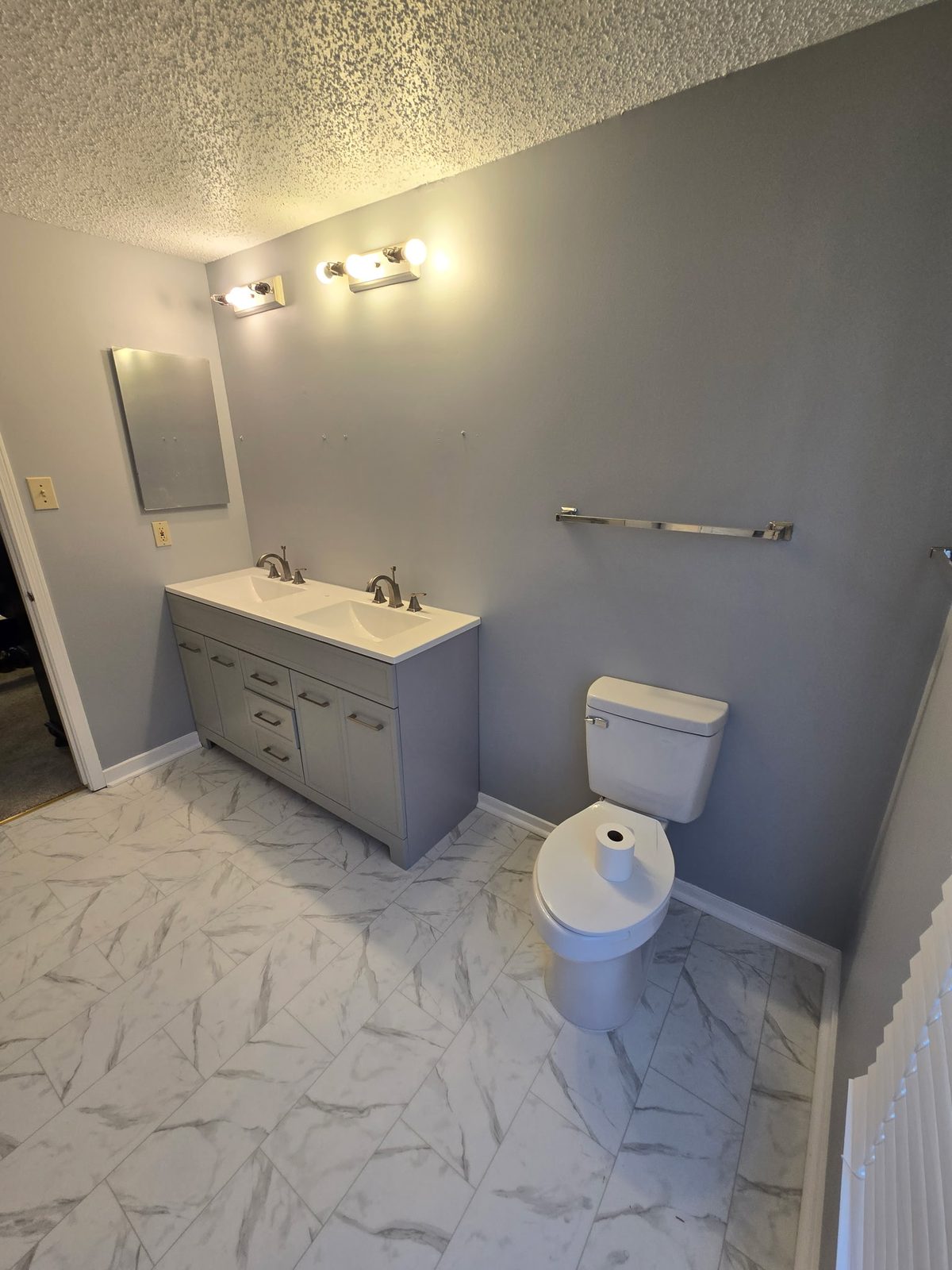
Most people delay accessibility work because they picture hospital hardware. It doesn't have to look that way — and the upgrades that matter most are cheaper than you think.
The vast majority of older adults want to stay in their own home. The obstacle is rarely desire — it's a bathroom with a 16-inch tub wall, a 28-inch doorway and three steps at the front door.
The good news: the highest-impact modifications are also the least visually intrusive.
Start with the bathroom
It's the highest-risk room in the house and the highest-return upgrade.
- Curbless or low-threshold shower with a linear drain — no step, no lip
- A fold-down or built-in bench and a handheld wand on a slide bar
- Grab bars anchored into real blocking in the wall, not drywall anchors
- Non-slip floor tile chosen for wet traction, not just looks
- Comfort-height toilet and a vanity with knee clearance where useful
Doors and passageways
A standard 28- or 30-inch door is too narrow for most mobility devices. Swing-clear hinges can buy you a couple of inches for very little money; true widening to 32–36 inches of clear width is the better long-term answer where framing allows. Replace round knobs with levers throughout — it's a cheap change with a real daily payoff.
Getting in the front door
- Evaluate every approach — garage and side entries are often the easiest ramp path
- Modular aluminum ramps install fast and are removable; custom wood ramps blend better
- Platform lifts work when the yard doesn't have room for ramp run
- Add landings, handrails, weather protection and generous lighting
The upgrades people forget
- Lighting — vision changes with age; more light and less glare prevents falls
- Contrast — a countertop edge that visually reads against the floor
- Rocker switches and outlets at reachable heights
- Pull-out shelving so nothing lives at the back of a low cabinet
- Flooring transitions flattened between rooms
Paying for it
Ask about VA SAH and HISA grants, Medicaid waiver programs and insurer benefits. Approval varies, but the documentation is straightforward when your contractor provides measurements, scope and photos in the format the program wants. We work alongside occupational therapists and case managers regularly.