
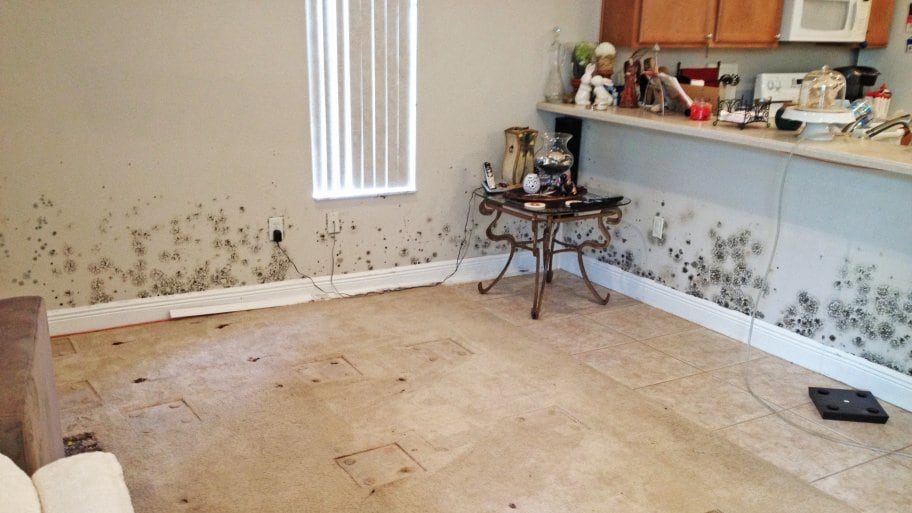
Mold is a symptom. Until you solve the water, everything else is temporary. Here's how to diagnose and fix it in the right order.
Maryland gives mold everything it wants: humid summers, clay soils that hold water against foundations, and a lot of houses built before anyone cared about vapor barriers. If your basement smells musty in July, that smell is data.
Where the water is coming from
- Grading that slopes toward the house instead of away from it
- Clogged gutters and downspouts dumping water at the foundation
- Window wells with no drain
- Foundation cracks from settlement or freeze-thaw cycles
- Hydrostatic pressure pushing groundwater up through the slab
- Interior humidity — unvented dryers, no dehumidifier, humid summer air condensing on cool walls
The correct order of operations
This is where most people go wrong. They clean the mold first, then wonder why it's back next spring.
- 1. Fix the moisture source. Grading, gutters, drains, cracks, sump.
- 2. Contain the work area so spores don't spread through the house.
- 3. Remove contaminated porous materials — drywall, insulation, carpet, pad.
- 4. HEPA vacuum and wipe all surfaces; dry the space to standard.
- 5. Disinfect, then rebuild with moisture-smart materials.
What not to do
- Don't paint over it. Mold-blocking paint on a wet wall is decoration, not remediation.
- Don't rely on bleach on porous surfaces — it doesn't reach the roots and adds water.
- Don't finish a basement that has an unresolved water problem. You're building a very expensive petri dish.
- Don't seal a crawl space without dealing with the ground moisture underneath it.
Prevention that actually works
- Keep relative humidity between 50% and 55% with a properly sized dehumidifier
- Extend downspouts at least four to six feet from the foundation
- Test your sump pump twice a year and add a battery backup
- Walk your basement after every major storm and catch stains early
Category 1 and 2 water losses — clean water and gray water — are what we handle, including containment, HEPA cleaning and rebuilding finishes. We coordinate independent third-party clearance testing on request so the all-clear isn't coming from the same company that did the work.