
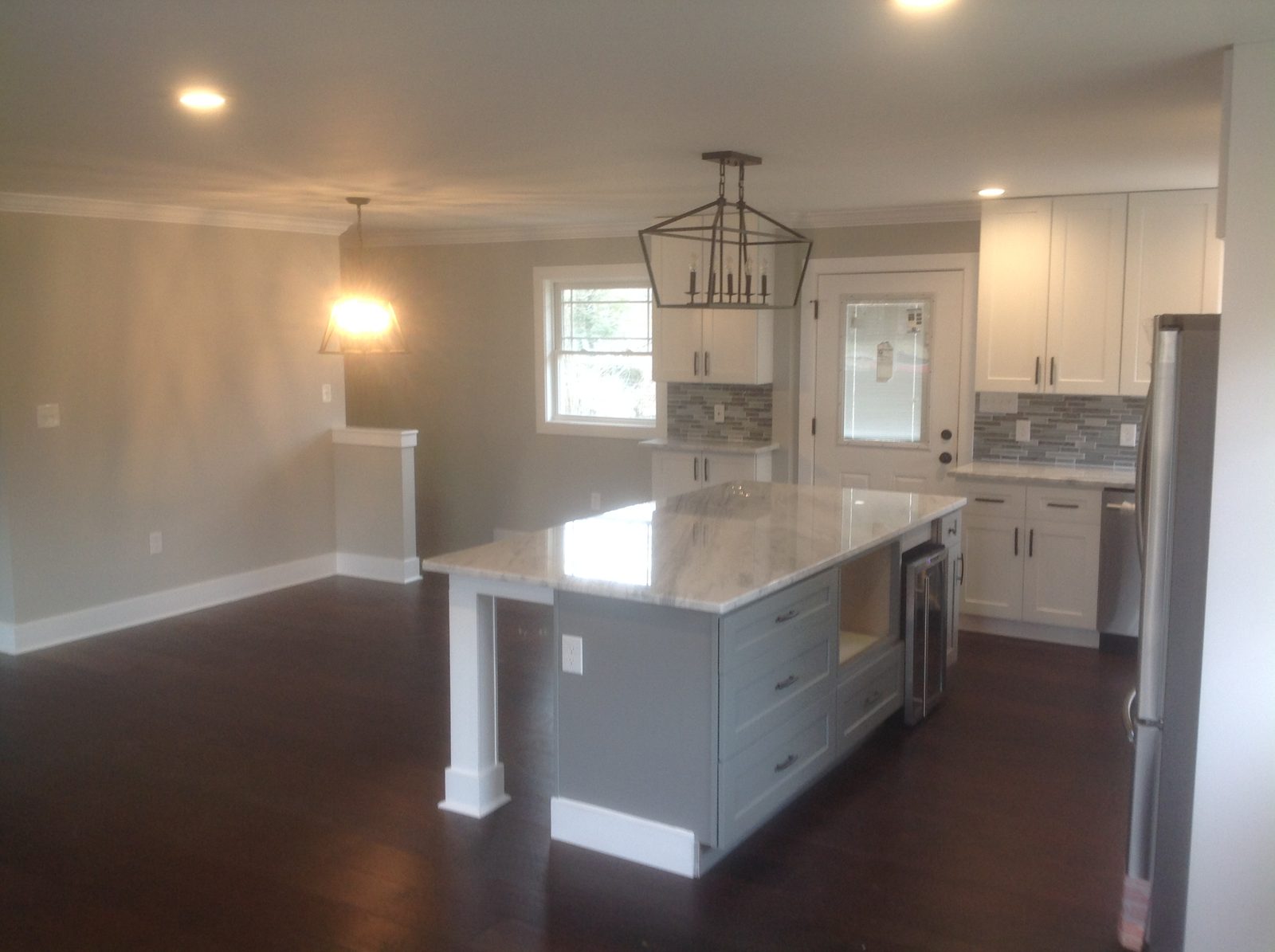
Two kitchens the same size can differ by $40,000. It's almost never the countertop. Here's where the money actually goes.
Homeowners usually ask about price per square foot. Kitchens don't work that way — a 120-square-foot galley with relocated plumbing can cost more than a 220-square-foot kitchen where everything stays put.
The four things that move the number
- Layout changes. Moving the sink, range or wall is where cost accelerates — plumbing, electrical, framing and sometimes structural work all follow.
- Cabinetry. This is usually the largest single line item, and the range between stock, semi-custom and custom is enormous.
- Condition behind the walls. Older Maryland homes routinely reveal knob-and-tube wiring, galvanized supply lines or unsupported spans once demo starts.
- Selections. Appliance packages and tile can swing tens of thousands without changing a single dimension.
A realistic schedule
Six to ten weeks on site is normal. Anyone promising three weeks for a full kitchen is either not pulling permits or not telling you about the countertop template gap.
- Design and selections: 2–4 weeks
- Cabinet lead time: 4–8 weeks (order early — this drives everything)
- Demolition and rough-in: 1–2 weeks
- Inspections, drywall, paint: 1–2 weeks
- Cabinet install, template, counters: 2–3 weeks (stone needs a template after cabinets are set)
- Backsplash, appliances, punch list: 1 week
Where homeowners overspend
- Moving plumbing for aesthetic reasons that a layout tweak could have solved
- Custom cabinetry where semi-custom would have been indistinguishable
- Premium appliances in a kitchen being sold within two years
- Changing selections after ordering — restocking and delay costs are real
Where it's worth spending
- Lighting design — layered task, ambient and under-cabinet
- Drawer hardware and soft-close mechanisms you touch every day
- Correct electrical capacity and dedicated circuits
- Ventilation that's actually ducted outside